Author Archive: carver

A City of Markets

SONY DSCForm detailed and up-to-date information about hours and events at the various market halls, visit:

http://www.piaconline.hu/new/index.php?pageLang=angol

or (with less current information but a broader range of several of the better and more central markets:

http://welovebudapest.com/shops.and.services.1/the.best.marketplaces.in.budapest

But I’m happy to give you my take on the ones I frequent as well.

The Nagycsarnok or Great/Central Markethall, is the major tourist mecca among market halls in the city,m but also a first rate functioning market for produce, meats, pickles, fish, game, and charcuterie.  Not the absolute top of the line, ad with somewhat higher prices than the more local markets, its mezzanine is filled withy souvenir booths and stand-up dining options. There’s a small farmers’ market on weekends, but don’t miss the Szimpla market on Sundays for artisanal foods and organic produce…

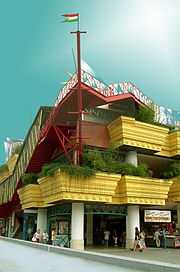
The Lehel ter Market Hall is the most modern, with a somewhat gaudy Asian feel to its exterior but perhaps the best array of foods of any of them in the city; surely the best farmers’ market in Pest, and the upstairs langos stand is among the best places to shoot up cholesterol in the city (the other competitors being the Hunyadi tér piac, and the markethall behind the Mammut Mall — the Fény utcai piac ).lehel market

Others that are worth a detour in various ways include the one a Rákóczi tér (great artisanal sour cream the thickness of creme fraiche), the one at Hold utca behind the American Embassy (now renovated and called the Belvárosi Markethall), and the one at Bosnyák tér (in the depths of working class/poor Budapest, a neighborhood no tourist ever wanders into and therefore in some ways worth a detour … but there’s no English spoke anywhere nearby and it’s not a neighborhood to get lost in especially at night … still a friend says it has the best langos anywhere in town)

Shopping in Budapest

SONY DSC


Shopping in Budapest is quirky.  It defies expectation.  Things tend to be dispersed, so similar shops most often don’t cluster in a single neighborhood.  Odd juxtapositions: a shop that sells new books and used linens, a shop that sells embroidery and liquor, a combination espresso bar and convenience store, dresses and yard goods for curtains, thrift shops and pawn brokers, shoe repair and locks.  Other places stock very narrow arrays: batteries, or LCD bulbs, or wooden toys.  You frequently can’t tell exactly what a store is selling by looking in its windows.  And entire genres of shop can slide past you unnoticed … it took me years to discover that there are stationers’ shops everywhere.

Part of this is the idiosyncratic history of Hungary’s post-1956 accommodation of small capitalist enterprises, which permitted small shops to exist outside the regulated economy.  Part of it is Hungary’s post-1990 economy, in which commercial real estate has been inexpensive, while inventory has often been prohibitively costly.

The result is a myriad of small shops, more or less scattered willy-nilly around the city center, with limited and eclectic collections of things to sell.  Lots of floor and shelf space, items spread out luxuriously, or sometimes pathetically, along the shelves.

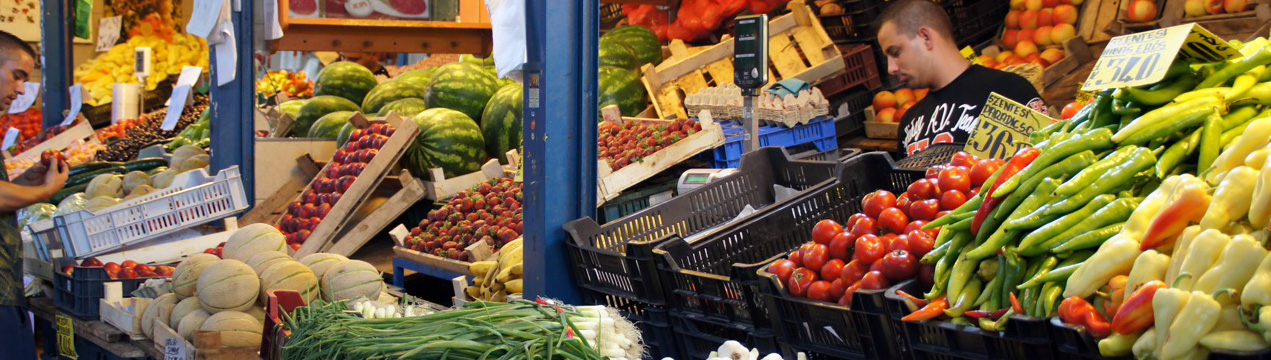
And then there are the market halls, a network of massive food and produce (and other goods) centers with individual vendors at numerous stalls all vying for your attention; these are detailed in the FOOD section of this website.


Money (Forints not Euros), Currency Exchange (in Budapest, not at home), ATMs, Travelers Checks (NO!), and Guys on the Street (ABSOLUTELY NOT!)

The only official currency in Hungary is the Forint.

Euros, or even Dollars or Sterling may be accepted by some tourist businesses, but very seldom at a reasonable exchange rate. Credit cards are commonly but not universally accepted. So it is wise to obtain some Forints for your stay even if you expect to use a credit card or debt card for as much as you can. It is also true that some few things aimed at tourists — hotels, some apartments, some taxis — may quote their rates in Euros or even prefer Euros.  We do this both because it is easier to compare costs against a standard currency and because our mortgages are in Euros and that’s where the rent willm ultimately be applied…

The Forint is a pretty rare currency and as a result (a) it tends to be hard to find and comparatively expensive when available in countries other than Hungary and (b) Hungary – which sits at the geographic center of Europe and its still-many currencies — has for centuries been a very aggressive marketplace for currency exchanges. It’s cheap and cost-effective to trade currency in Budapest.

Here’s everything you need to know to do this intelligently:

The short answer: Remember, this is a vacation (or a business trip), not an episode of Survivor. There’s no need to wring the last penny out of your exchange transactions if doing so will inconvenience you greatly or leave you potentially stranded without cash. Just try to avoid being gouged by the exchange bureaus at the airports and train stations. In other words: do not exchange currency at airports, hotels, and banks. There are literally thousands of 100% legit currency exchange offices. In Budapest, you usually find the best rates around the Grand Boulevard and Rákóczi Street area. They charge 0.3% mandatory commission.

In general, the Hungarian banking system is hostile ton paper.  Avoid checks of all sorts, including travelers’ checks, which can be impossible, difficult, inconvenient, or costly to convert or cash.

If you want to use your ATM or credit card find out how much your ATM card issuer and your credit card issuer(s) will charge for foreign transactions. And find out who will do the currency exchange when using each card: MasterCard? Visa? Your own bank? Or someone else?  In general, ATM cards with a MasterCard or Visa logo will exchange at 3% above the midpoint, if you opt (as you SHOULD) not to do the exchange locally, not to charge your card in your home currency, but YES to charge your card in Forints.  But your issuing bank may impose fees or charges beyond the exchange rate, so check before leaving home.  And inform your card issuer that you will be traveling!  Otherwise they may block your card when you try to use it.

Under most circumstances, if the exchange will be done by an entity other than Visa or MasterCard, try to avoid using that card.

Credit cards can remain a low cost method of changing dollars into forints, as of May 2014, unless your card issuer imposes foreign transaction fees.  Check with your card issuer about whether they charge any fees for foreign transactions (one of mine charges 3%; another charges nothing.  Guess which I use?)

The long answer:

Hungary doesn’t charge you anything to exchange money there. Well, hardly anything … there’s a tax of .3% — that’s $3 for every $1,000. Beyond that, the ATMs don’t charge anything and as usual there’s no extra charge for using a credit card, so there’s nothing special about Hungary – it’s all about what they charge you at home.

Currency Exchange Bureaus:

There are lots of exchange bureaus, there’s vigorous competition, there’s a real-time website that quotes the rates of many of them and displays them on a map (admittedly only in Hungarian, but a user’s guide follows below).  Exchange in Hungary, not at home, even if you are seeking Euros as well as Forints.  If you wantn some immediate Forints, hit an ATM at the airport or train station.

If carrying cash and taking the time to exchange it intelligently doesn’t impinge on your trip, you will likely find that this is as good as, or better than, any other option.

First , some tips that are true anywhere in the developed world.

Don’t accept any offers to exchange currency covertly on the street or in a café. The better the deal you are offered, the faster you should walk away from it. If the person making the offer doesn’t have a bit of real estate – even a kiosk in a corner of a dress shop — don’t give it a second’s thought.  If they do have a kiosk, they’re fine.

Also, remember that once you slide your money under that bulletproof glass partition it’s likely going to be hard to get it back, so do your discussion before you hand the money over. And notice that they have money counting machines and a calculator and a computer. You are standing there trying to figure out some way to avoid having the loitering tramp behind you notice which pocket you carry your wallet in. So, if you have a smartphone, use its calculator function to do some math before you even walk up to the window and ask how many Forints you’ll get for your money. Then compare their offer to your own math before you commit.

Ask about how the commission is calculated before you decide on the transaction. And it can’t hurt to ask if they will waive the commission if you don’t need a receipt.

Note that small transactions may be at a worse rate than posted on the street; large ones may be at a better rate than posted. Ask. And count your money before handing it over, within their field of vision. And count the money they give you before you leave. It’s not rude. The person on line behind you will forgive you. Your small child does not need to find a WC that badly. Go ahead, count it.

OK, so here’s the routine:

All legitimate places with fair prices will post two prices for each currency on a sign in the street: a ‘Buy’ rate and a ‘Sell’ rate. If you want Forint, you are selling your home currency. That should be the lower number on the sign. At the end of the trip if you want to get rid of your Forints for your home currency, you are buying your currency back and that should be the higher number.

Anyway, the important thing is the spread between the two numbers. Figure out how much it is for your currency. You’d like it to be less than about 2% total because that means an excellent rate of about 1% off the midpoint. Check what the midpoint is before you head out to exchange money ( xe.com or any of the many other live sources).

This first one will map any bureau it finds if you click on the blue globe below the listing. Note that it can also add banks and other offices as well as exchange bureaus, and these can be selected or deselected at the top center.

http://valutavaltok.hu/valuta-arfolyamok?currentpage=0&filter_collection=1&filter_notguaranteed=0&filter_type_b=0&filter_type_u=0&filter_type_v=1

Perhaps somewhat simpler, because it’s also somewhat less powerful, but it’s exclusively in Hungarian (with instructions in this article, just below, on how to use it even if you know no Hungarian at all)

http://www.valutacentrum.hu

If you have an iPad it will warn that you need Flash for the charts, but you don’t care about the charts, so click CANCEL rather than OK and you will go straight through to the part of the website you want.

You will find yourself staring at an unintelligible (because it is entirely in Hungarian) webpage; here’s what you do:

leave that ‘1’ in the top box

in the first dropdown menu pick your starting currency

in the next line, ‘venni’ means ‘buy’ and ‘eladni’ means sell … click on eladni because you are selling that starting currency and buying Forints

in the next dropdown menu pick ‘Budapest’

in the one below that (the third one down), pick ‘Budapest’ again

in the one below that (the 4th), pick the district of interest; the Vth is the dead center of the city

do nothing to the bottom-most dropdown menu

and then click at the bottom left ‘KERES’ (search)

you will get a list of many exchange bureaus, with addresses and realtime current rates they offer

there will be a map below the list

As of today, August 22, 2014 the best rate is offered by correctchange.com (physical locations listed). In Budapest, usually the best rates are found inn the extended downtown area, between the Grand Boulevard and the river.

ATMs/Debit Cards/Credit Cards: To use any of these abroad they should likely have either a MasterCard or a Visa logo on them.

All foreign financial transactions are shaped like a wheel with lots of spokes and a hub at the center. That hub is a clearinghouse. The ATM is at the end of one spoke and your card issuer is at the end of another one. Most of the time the clearinghouse can be thought of as being Visa or Mastercard.

So you stick the card in the ATM (if it is an ATM card; if it’s a credit card you may be able to do that but it will cost you as a loan or cash advance, which is usually pricey), and the ATM dials into the hub, which then dials out to your bank and finds out how much money you have. If you have enough money for the withdrawal you asked for, the hub tells whoever owns the ATM to give you that much money and it tells your issuing bank to replenish that much money to the ATM owner.

The hub charges a fee for being the hub. It’s a bank, after all, be grateful they don’t foreclose on your impogverished mother’s home or demand your first-born child. These days the fee is quite small, 1% or less and your card issuer pays it and either swallows it or includes it in the fee it charges you if it charges you a fee.

The only wrinkle is that you are taking out Forints and your home institution is sending off Dollars or Sterling or Euros or whatever. Someone has to do the transaction, and in theory it could be any of the three – ATM owner, MasterCard/Visa, or your home issuer.

MasterCard/Visa generally will do it at a very favorable rate, within 1% or less of the midpoint.

You can see what the midpoint is in real time here (and lots of other places):

http://xe.com

You can see what MasterCard trades at here:

https://www.mastercard.com/global/cur…

You can see Visa here:

http://corporate.visa.com/pd/consumer

In the Short Answer if you followed that advice you found out who will do the currency exchange for each of your cards. If it’s the issuer, you likely should not use that card unless you have a very certain knowledge that they’ll do well by you. If it is Visa/MC will give you a favorable rate. These days, many ATMs will offer to do it locally, in the ATM owner’s venue. This is almost always a bad idea, a good bit worse than MC/Visa.

The language may be confusing, and it may seem to be the right thing to do because they will tell you exactly what rate they offer, and will not tell you who will do the exchange or what rate you’ll get if you don’t accept their offer. But bite your lower lip and turn them down. Just say No.

If you do that, you should get your money for the cost of what your home issuer charges you plus about 3%.

[A note on Capital One: they advertise that they charge no foreign transaction fees, and that’s true. BUT only for their credit cards (not their bank’s ATM cards) and only for use with vendors. If you use their credit card at an ATM you are taking out a cash advance and will be charged accordingly. If you have a CapOne ATM card from their bank, their No Foreign Transaction Charges ads don’t apply (though their rates are pretty good).]

That’s it. If your bank charges nothing back home, using an ATM should cost a bit more than using a currency exchange, and it’s far more convenient. If your bank charges a significant amount, you can easily find a currency exchange shop that won’t.
Electricity and Adaptors — Voltage, Wattage, Meltdown Avoidance

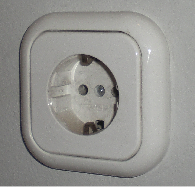
Budapest uses the same electrical standards (220 volts, 50 hz) and plugs (schuko) as much of Western Europe, with the outlets having two round holes. Grounded outlets are recessed and near-universal; rarely, you may find ungrounded, flush outlets (though never in our apartments).

Here is what one of the sockets in the apartment looks like:
outlet

For visitors from the USA, In the USA we use 110volts and 60 HZ. This means that the voltage and the plugs in Budapest are different from at home. See the Before Leaving Home section below.

For those from the UK voltage at home is 240v and 50 HZ. That means the voltage is essentially the same in Budapest but the plugs are different. If you are coming to Budapest with electrical/electronic gadgets from home, all you will need are adapters for the European plugs.

For the rest of the world, you have to figure it out for yourself because I don’t know what you have at home… http://www.powerstream.com/cv.htm

If you are traveling from a country like the USA with a different voltage standard and different outlets/plugs, here is what you need to know to operate any gizmos you happen to have brought along and feel are essential to the quality of your life (note that we provide hair dryers, a hot water kettle, a coffee maker, etc):

BEFORE LEAVING HOME (USA): SO the first thing to do, before you do anything else, is ascertain what voltage your gizmo needs, and use a converter if, and only if, you have to modify the voltage. Take everything you plan to bring along with you and sort it into three heaps: (1) electronic doodads with universal (110-240v 50/60Hz) power supplies; (2) electronic doodads with 110-120 volt power supplies, and (3) electrical doodads with substantial wattage and 110-120 voltage. Label them or do something to keep them straight.

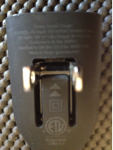
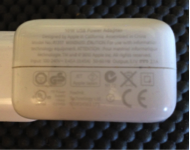
(1) Universal power supplies. Many small electronic devices (phones, most cameras, most laptops, iPads, iPods…) work with 110-240 volts. Those are very flexible doodads. All power supplies for laptops, mobile phones, PDAs, iPods, and the like tell you somewhere on them (sometimes in very tiny type and sometimes it’s just in raised letters in very, very tiny type, black on black, but it’s there) how many volts (input) and how many watts (input) the device requires. For instance, the unreadable stuff embossed on this plug:

power supplies 3

or the tiny print here:

power supplies 2or the relatively clear information here:power supplies 1
the electrical specifications are always there, but their visibility ranges from the clear to the near- undetectable; squint and persevere…it’s important!

If your device will accept 220 Volts USE AN ADAPTER (if you need to) to change the plug to make it fit into the receptacles in the apartment. DO NOT USE A CONVERTER, which may well get confused (or confuse your gizmo), causing it to overheat, melt, give off toxic fumes, and otherwise act in an anti- social manner. In Europe, use a 220 outlet for these devices. See The Big Picture below if you are the sort of person who only believes things when they have been told the reason why.

(2) Small electronics with 110-120 power supplies. Some manufacturers still, stupidly, provide power supplies specific to the country the item is purchased in. If you are traveling with anything that specifies 110-120 volts, only plug it into something that provides that voltage. You may or may not need an adapter to do so.

(3) Electrical appliance that require more than 5 watts. Hair dryers, water heaters, curling irons, laser printers, x-ray machines, space heaters, portable electric chairs … and other things that may sometimes make the lights dim momentarily when you are at home, these all use more power than most converters can handle. If you plug one of these into a converter you will likely blow a circuit breaker and possibly start a fire. Please try to avoid doing that. Even if yours operates on 220-240 volts as well as 110-120, recognize that it may overtax the circuit breaker if you plug it into the wall. I would rely on what is already in the apartment, or if you feel it is essential to use only the specific curling iron that your hair is intimately familiar with and willing to perform for, make sure you are not also using the a/c or the washer or the dryer or the stove.

IN THE APARTMENT — THE BIG PICTURE:

In order get electricity out of the wall and into your gizmo there are two, separate, requirements: the voltage needs to be acceptable to your gizmo (if it is not, you will likely fry the gizmo and, perhaps, set fire to your loved ones); and, separately, the plug from your gizmo somehow has to fit the receptacle on the wall. These two requirements are dealt with either separately (voltage conversion is done by a CONVERTER that ‘steps down’ the 220 volts to 110; making the plug fit the holes is done by an ADAPTER) or together (because sometimes, converters also function as adapters; adapters never function as converters).

HERE IS THE BIG DANGER IN CONFUSING CONVERTERS AND ADAPTERS: It is possible, using an adapter without a converter, to make your gizmo’s plug fit into the wall without changing the voltage. If you do that and your gizmo requires 110 volts, it’s bye-bye gizmo. If, on the other hand, you have a gizmo that works with both 110 and 220, and you plug it into a step-down converter, the chip in your gizmo that decides whether it is getting 110 or 220 will get confused and anxious and frustrated, causing it to heat up and potentially fry the gizmo (and perhaps those standing nearby). I think this is because of the difference in HZ, which converters do not convert, but I am far from sure if this is the reason…just trust me, THIS IS A BAD THING TO DO: IF YOUR DEVICE ACCEPTS 110-220 (or 110-240) PLUG ITN INTO WHATEVER IS COMING OUT OF THE WALL; do NOT convert it. Just use an adapter if necessary.

IN THE APARTMENT – WHAT WE PROVIDE;

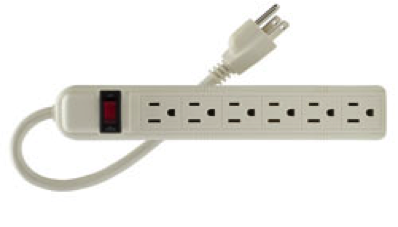
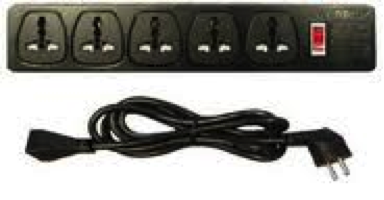
You will find stashed somewhere a rather comprehensive set of adapters, and you probably won’t need any of them? Why? Because we also provide two power strips, each clearly marked.

One is white and accepts only US-style plugs. It is connected to a converter and provides 110-120 power for devices that require 110-120 and cannot operate on 220-240:110v outlet strip

The other is black and provides 220-240, and here’s the cool part: it accepts all plugs (pretty much; certainly US, UK, and European ones, but also some others), so it requires no adapter. Google ‘Wonpro’ to find out about exactly what you can plug into it:220 universal outlet strip

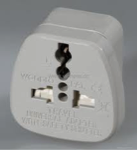
But we also provide adapters, and a converter or two, in case there aren’t enough holes in the power strip or you want it elsewhere in the apartment. Specifically, you should find a couple of Wonpro universal adapters (and we strongly recommend these if you’re going to buy a travel adapter for general use elsewhere; they’re great, solid, and relatively inexpensive from a variety of vendors on Amazon:universal adapter

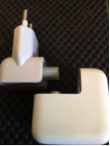
And also several chargers, including: (1) a European connector for Apple’s iPad ‘iPod/computer charger brick;

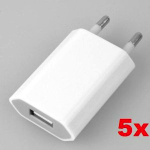
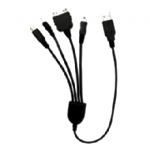
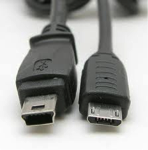
chargers 1(2) a white USB charger that works on European voltage and has European plugs and accepts any cable with a normal USB (male) plug at one end (this includes iPhones and many cables that allow you to charge your mobile phone from a computer); this charger is not powerful enough to charge an iPad; chargers 2(3) European wall chargers for devices that have a mini-USBchargers 4 and (4) a micro-USB connector (Most Blackberry phones use one or the other, and in fact almost all newer phones will accept one of these); and (5) a hydra-headed USB connector cable that should work with almost any device imaginable that accepts 5-5.1 volts input from its charger:
 

chargers 3

So you should be pretty well covered for adapters. The big heave black things are converters, and they typically are not powerful enough to convert more than 5 watts.


Souvenirs & Gifts

Guests often ask where they can find something specialm to bring home to family members or friends; Budapest is not really a souvenir sort of town … the real pleasure you take home will be less tangible. But over the years we have come across a range of places that feel uniquely to capture aspects of the city:

Paprika and Foodie stuff: The commercially packaged paprika is not bad, but there is often extraordinary artisanal stuff available much of the year at the farmers’ markets within several of the market halls. The Central Market has a small farmers’ market in the area by its rear exit on Friday and Saturday mornings, but there are far larger ones available every day at the market behind the Mammut Mall and at the one at Lehel tér. Look for deep, rich red in sweet paprika, bright electric orange in hot paprika. If you have both options, choose paprika from Kalocsa over that from Szeged (they can be equally good, but Kalocsa is smaller and more consistent).

For artisanal foods products, check into WAMP as well – WAMP is an every other week design and gastro market held in Erzsebet tér. http://wamp.hu/en Or every Sunday at Szimpla Kert: http://www.szimpla.hu/szimpla-market

Oh, and if you find the nut and dried fruit guy in the Lehel tér market, on the wall to the right there’s a shelf with very large bricks of very intense fruit jelly blocks (apricot, plum, mixed). Get a chunk the size of a brick and pack it well to bring home. English not really spoken here.

A word on foie gras (libamaj in Hungarian). Bringing home a fresh goose liver is forbidden in the USA (but legal in the EU), but is such a bargain (4,000-6,000 Forints/ kilo, roughly 1/7 the cost at butchers in NYC), and is so good (indeed, so much richer and more flavorful than those available in the USA or France), that it’s tempting to take up smuggling. Sadly, bottled, tinned, and potted versions are costly (though inexpensive compared to France) and, more importantly, taste like cat food; pass them by

And here’s a weird foodie souvenir: over the years we have found that the paper that our cheeses and cold cutrs from the central market come wrapped in keep them fresher and less moldy than anything at home. I asked at random whether one of the cheese shopsn in the Central Market would sell me some and brought home 200 sheets at $.02/piece. I use it constantly now and my cheeses keep indefinitely

More from my food obsession: the retro Hungarian soft drink Marka, in its sour cherry flavor, is worth ferreting out in the larger supermarkets and tasting, and if you like it, pack some well in your checked bags. And check out the wonderful bags of throat lozenge called Negroes … in almost any supermarket.

Crafts, Artisinal Gifts and Folk Art: If you are around during the Christmas market or the crafts fair at the Castle District on August 20, you can find all sorts of interesting local crafts there. But most of the rest of the year the relentless kitsch of Vaci utca or even the mezzanine of the Central Market can make it feel as though every souvenir shop has the identical objects at the identical prices, straight from the identical production lines in China. For an alternative, check out the small shop under the eaves as one turns into Semmelweis utca from Kossuth Lajos. All sorts of things from jewelry to clothing to art. An upscale, interesting shop. Just down the street, on Kossuth Lajos (#4) you’ll find Szkita Kezmuvesz Bolt – a tiny shop that specializes in nationalist regalia. Despite my uneasy feeling that this place serves the extreme right wing political party – Jobbik — as the sort of shop where Ku Klux Klansmen bought their white robes, you’ll find all sorts of things here you won’t find anywhere else, from t-shirts to authentic replicas of the medieval tribes gear from boots to bows and arrows. Hungarian website: http://www.szkitabolt.hu

And there’s a marvelous puppet workshop and shop on the corner of Dob and Sip. (Hungarian website, but great photos and a sense of the place.) http://www.manufaktor.hu/manufaktor/manufaktor.html

Perhaps our favorite little kitschgy place is Hollo Workshop, around the corner from the Gerloczy Café on Vitkovics Mihaly utca: http://www.blogger.com/profile/03383127552191913154

Modern Hungarian Design: Again, the design market on Sundays in Vaci utca #1 is a treasure trove of modern artisanal design: http://wamp.hu/en   There is a small artisanal design shop as well on Semmelweis utca, with daily hours: Rodendron. Also peek into Medence when you go to the Central Market, a design workshop and store on Pipa utca, the small side street to the left of the Market Hall building as you face it. There’s also a design shop – Hybridart — in the display gallery at Erzsébet tér, and Printa, a silkscreen design shop on Rumbach Sebestyén. And a modest crafts fair on Sundays in Gozsdu Udvar…

Gloves: Some of the finest men’s and ladies’ gloves are crafted in Pecs (that’s where Coach gas theirs tailored). You can find an array of excellent examples of these in a small shop just north Astoria on Karoly Körut. Not cheap, but excellent value and workmanship. Pannon Gloves, Károly krt 4. Website (Hungarian): http://www.pannonpecsikesztyu.hu

Furs: If you know what you are doing, Hungary is a great place to buy furs that are tailored locally. But it really takes a buyer who has the right mix of knowledge and experience to know how to distinguish the quality of the work. Shops on Regiposta utca and around the start of Dob utca would be where I would start …

Ties: Kaczian is a tiny, shop whose owner is an elegant woman who selects the fabrics, designs the ties, and oversees their handmade production. Ties, bowties, cravats, mufflers; wonderfully made not cheap, but priced around the same as mass produced items from comparable fabric in the USA. Kind of a treat just to wander in off the pedestrianized alley between Vaci utca and Petöfi utcs – Régiposta utca 14.

Diaries, journals, and papers: Kaczian is adjacent to an artisanal paper and portfolio shop called Bomo Art Paper, which is also something of a find.

Tablecloths: You can find antique and pseudo-antique lace at the Ecseri Flea Market and at shops on the antique street, Falk Miksa utca, but there is also a kind of contemprarily-woven linen-y fabric that makes wonderful tablecloths, is distinctively Hungarian, and is our favorite style to bring home.  You can spot this material in some shops around town, but the best we have found come from a woman whose stall is just to the right as one enters the Ecseri Flea Market, a good ways out of town.tablecloth fabric

Duvets and pillows: Most of ours come from Peter’s Paplan a pretty rigorously Hungarian-speaking-only  manufacturers outlet’s a relatively sketchy part of town … Kálvária square 19. Another, quite wonderful, option that is more central and approachable and English-fluent is Elfenbein at Teréz krt. 35.  Elfenbein will make things to order on very short notice and also help with VAT refunds.

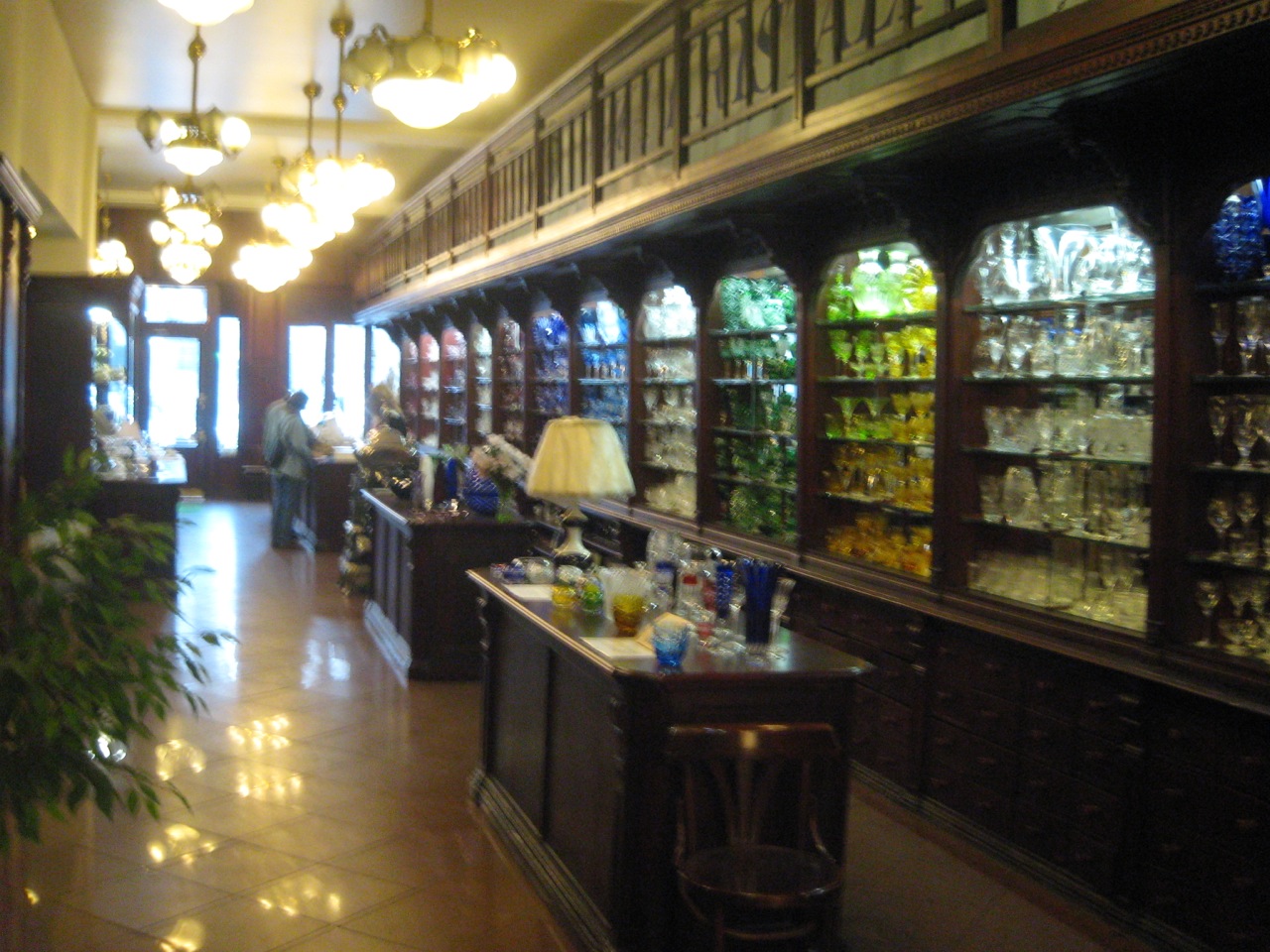
Crystal: Ajka Crystal is produced in a small town in Hungary where fine lead crystal has been crafted since the 19th Century. There is a large shop (which often has a well-stocked sale table) on Kossuth Lajos (#10) utca between Varoshaz and Semmelweis.

Custom Men’s Shoes: The guy who wrote the book on the subject is Laszlo Vass, and he has a shop on a small alleyway – Harris Koz — between Vaci utca and Petofi utca. I personally am not a fan – I have not found the sales staff welcoming or helpful and they have been resistant to modifying designs – if you can’t customize a custom-made shoe, what’s the point? Instead, I shop at Istvan Toth’s workshop and store on Vamhaz körut. Toth is more bootmaker than top-of-the-line fancy dress shoemaker, but I like his work a lot, he has been happy to work with me to modify his designs and to copy shoes I especially love, and his prices are a very good value. The next pair of shoes I have made, though, will come from Rozsnyai Shoes– next to Vass on Harris koz (a former orthopedic shoe maker, he and his son have turned their attention to fine footwear with a level of zeal and attentiveness ….).

Oh, and there are retro communist era sneakers available as well, kind of the anti-custoim shoe: Tisza Sneakers very near Astoria: http://www.tiszacipo.hu/en/uzletek/Magyarország/Budapest

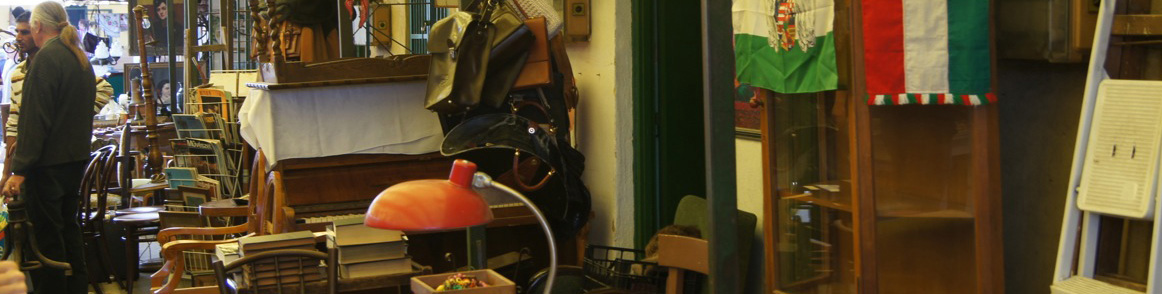
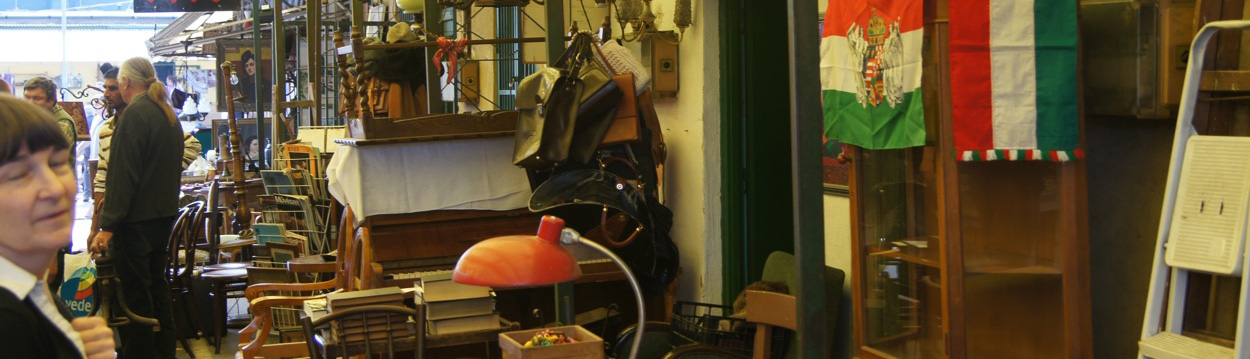
Antiques and Flea Markets: There is a great old-style, somewhat tattered (by definition?) flea market at Ecséri, outside of town. Within Budapest there is an Antiques street – Falk Miksa utca… don’t miss the catacomb shop Pinter Antik or the outlet for BAV the national pawnshop chain , which also has furniture and jewelry shops at Szervita tér the jewelry and silver stuff in the shops by Szervita tér are particularly worth looking at if you are interested in relatively reasonably priced high end gifts and souvenirs to take home. Near the Central Market, there is a somewhat lower end antique shop we like on Vamhaz krt (#9) – Klapka. And there are a number of kitschy junk shops – often called Antik Bazaar – one on Dohany just before Sip and another on Klauzál utca just before Rákóczi. And there’s a collection of small antique/junk sellers in an indoor market on Anker köz.

Restaurant Overview

SONY DSCA Note on Prices:  I tend not to mention prices because as a New Yorker I’m more or less pleasantly surprised everywhere I go in Budapest.  Admittedly, it’s not like the dental work or the plastic surgery, where the price difference is enough to finance your trip, but everything is inexpensive enough that you don’t have to pay very much attention to what you order.  When I eat here, I tend to have one extra course that I wouldn’t order in New York, and considerably more beer and/or wine, and the prices still wind up being 30-50% less.  In general, the restaurants discussed here will cost $20-35/person, everything included, at dinner time.  Many, many places (including the etkezdes mentioned and other small places) will cost well under half that, especially when ordering a tourist menu.  Some places can cost $50/person or even $75, but it takes work to spend that much on a meal in Budapest.  When a restaurant’s prices are especially low or high, I try to mention it, but otherwise I am afraid I’m not much use here.  Many have websites, and on those websites many post their menus, so that may be some help.

A Note on Tipping:  There’s an old story about the trip by rail from France to Russia on the Orient Express during the soviet era: people from Moscow pulled into the station in Budapest and thought they had reached Paris; those from Paris pulled into the Budapest station and thought they had reached Moscow…

Tipping is sort of the same thing, it depends on where you come from; Budapest captures a little bit of both.  If you start from Paris, where service is included in the bill by law and tipping beyond rounding the bill to the nearest Euro is an uncommon recognition of really extraordinary service, Budapest will seem familiar.  No one seems to expect a tip, and 10% is often greeted with real appreciation or even surprise (especially when one is away from the tourist areas).  The service is often lax, indolent or surly (though less and less frequently so) and customer satisfaction seems a low priority in many places.  Cab drivers especially seem not to expect much of a tip.

But if you come from New York City, you’ll recognize that most waiters in Budapest are extremely ill-paid and those in the tourist venues especially so, relying on tips as the bulk of their income.  In settings aimed at foreign trade tipping 10-15% seems increasingly to be hoped for if not expected.  In general, wages for most jobs are low enough that not tipping is, in fact, an indignity deserved only by those who do a genuinely poor job.

So, I have come to tip 15% for good service in tourist locations, 10-15% in spots that seem really aimed at local trade.  But you can get away with almost anything.

eating in budapest

Budapest and its residents are oddly unstuck in time.  Buildings that you pass appear to have been built hundreds of years ago, and they bear the scars of sabers striking them, bullets ricocheting off of them, grand regimes decorating them and poor ones deferring their maintenance.  It’s the simultaneity of it all that’s so striking.

The more I visit Budapest the more convinced I become that sightseeing is not the point.  There are plenty of sights to see, but, frankly, they have little to do with why I keep coming back again and again, or, I think, with why our guests enjoy the city so much when they travel with us.  I recognize one has to do something while trying to get at the more subtle and intangible aspects of the city, so I’ve tried, in the remaining pages of this section of the website, to provide tools for visitors who want to keep their left brains occupied while their right brains soak up the milieu.

But for the remainder of this page, let me try to put into words the kind of thing that makes Budapest so special for me:

Budapest and its residents are, to start off with, oddly unstuck in time.  Buildings that you pass appear to have been built hundreds of years ago, and they bear the scars of sabers striking them, bullets ricocheting off of them, grand regimes decorating them and poor ones deferring their maintenance.  It’s the simultaneity of it all that’s so striking, these things layer on top of each other like the components of a Photoshop document, and then someone issued the Merge Layers command.

But it’s not just the architecture.  The people as well seem to be living simultaneously in a stretch that extends back at least to 1848 (though for many it goes much farther back than that, to the Turks at least, and well beyond them to the Magyars) and forward into the present, all at the same time.  The Treaty of Trianon partitioning Europe after WW I continues to rankle.  Rankle? It’s an ongoing affront to the Person-on-the-Street.  It’s a current topic of conversation at dinner or over a glass of beer.

But so is the 1848 revolution, and the words and actions of the adolescent poet-revolutionary Sandor Petöfi, who declaimed his great exhortative poem and led the populist revolution, starting (characteristically) in a café (in the Pilvax Hotel off Vaci utca) and marching off to the steps of the National Muzeum, only to die tragically young in battle.  His fate brings contemporary tears to the eyes of all Budapesters, who seem universally to recall not only the events but Petöfi himself as though they were formative components of their own lives.

And so is World War II, a scar on people’s recent memories, involving (by and large, though there is a small but vocal Neo-Nazi nationalist movement in Budapest; less present than in other Central European countries but there nonetheless, and stronger outside the cities than within them) great pride in the nation’s efforts to shelter itself (and its Jews) from the Nazi onslaught, and deep shame at the collapse of that effort in 1944.   There is a reason why of all the Central and Eastern European countries, Hungary maintains a significant Jewish population (the second largest per capita in Europe and among the largest in the world).  Many Hungarian Jews survived, and still more returned…

…only to find that the Russian era was less intense but no less harsh.  And so, 1956 lives vibrantly in the memory of even the youngest child.  Hungarians born well after 1956 seem nonetheless to recall viscerally the stance in front of the Television Building, the toppling of Lenin’s statue, the Russian tanks mowing down the revolutionaries and the revolution, the mass unmarked graves in Kerepesi Cemetery, and the children valiantly fighting (and being gunned down) at the Corvin moviehouse.

It is quixotic but not surprising that Hungary boasts two major national holidays (of course, if other countries have one, Hungarians must have two), and that the entire nation turns out for both, with red-white-green pins and public processions and fanfare and speeches and young girls dancing on makeshift stages.  And no one seems at all concerned that one celebrates the socialist nationalist uprising of 1848 and the other the anti-socialist nationalist uprising of 1956.  Or that both were failures measured in mere days.  They are linked by the heroism, the spirit, and the fact that at heart Hungary has always been populist and always been dominated by one outside invader or another, and always bristled at being a vassal state, whether under the Austrians or under the Russians.

So as you walk through Hungary’s streets, this feeling of 150 years of immediate and simultaneous shared history forms the atmosphere through which you move, the air that you breathe.

It is abetted by the odd mix of fashion that seems to tumble the 19th Century (there is a tailor on a side street who exclusively crafts bespoke 19th century army officers’ uniforms) into Eastern Bloc severity into 1950s push-up bras.  There are hot pants and Retro and lots of Hungarian beer bellies proudly displayed in gaps between t-shirts and work pants, nicotine-stained fingertips and teeth, a world unshackled from fear of coronaries and cancer.


Sightseeing

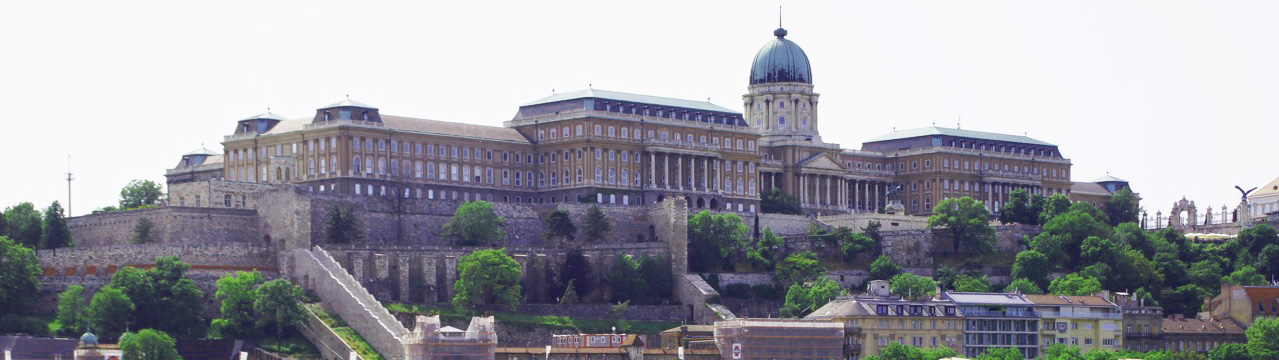
SONY DSCBudapest and its residents are oddly unstuck in time.  Buildings that you pass appear to have been built hundreds of years ago, and they bear the scars of sabers striking them, bullets ricocheting off of them, grand regimes decorating them and poor ones deferring their maintenance.  It’s the simultaneity of it all that’s so striking.

The more I visit Budapest the more convinced I become that sightseeing is not the point.  There are plenty of sights to see, but, frankly, they have little to do with why I keep coming back again and again, or, I think, with why our guests enjoy the city so much when they travel with us.  I recognize one has to do something while trying to get at the more subtle and intangible aspects of the city, so I’ve tried, in the remaining pages of this section of the website, to provide tools for visitors who want to keep their left brains occupied while their right brains soak up the milieu.

But for the remainder of this page, let me try to put into words the kind of thing that makes Budapest so special for me:

Budapest and its residents are, to start off with, oddly unstuck in time.  Buildings that you pass appear to have been built hundreds of years ago, and they bear the scars of sabers striking them, bullets ricocheting off of them, grand regimes decorating them and poor ones deferring their maintenance.  It’s the simultaneity of it all that’s so striking, these things layer on top of each other like the components of a Photoshop document, and then someone issued the Merge Layers command.

But it’s not just the architecture.  The people as well seem to be living simultaneously in a stretch that extends back at least to 1848 (though for many it goes much farther back than that, to the Turks at least, and well beyond them to the Magyars) and forward into the present, all at the same time.  The Treaty of Trianon partitioning Europe after WW I continues to rankle.  Rankle? It’s an ongoing affront to the Person-on-the-Street.  It’s a current topic of conversation at dinner or over a glass of beer.

But so is the 1848 revolution, and the words and actions of the adolescent poet-revolutionary Sandor Petöfi, who declaimed his great exhortative poem and led the populist revolution, starting (characteristically) in a café (in the Pilvax Hotel off Vaci utca) and marching off to the steps of the National Muzeum, only to die tragically young in battle.  His fate brings contemporary tears to the eyes of all Budapesters, who seem universally to recall not only the events but Petöfi himself as though they were formative components of their own lives.

And so is World War II, a scar on people’s recent memories, involving (by and large, though there is a small but vocal Neo-Nazi nationalist movement in Budapest; less present than in other Central European countries but there nonetheless, and stronger outside the cities than within them) great pride in the nation’s efforts to shelter itself (and its Jews) from the Nazi onslaught, and deep shame at the collapse of that effort in 1944.   There is a reason why of all the Central and Eastern European countries, Hungary maintains a significant Jewish population (the second largest per capita in Europe and among the largest in the world).  Many Hungarian Jews survived, and still more returned…

…only to find that the Russian era was less intense but no less harsh.  And so, 1956 lives vibrantly in the memory of even the youngest child.  Hungarians born well after 1956 seem nonetheless to recall viscerally the stance in front of the Television Building, the toppling of Lenin’s statue, the Russian tanks mowing down the revolutionaries and the revolution, the mass unmarked graves in Kerepesi Cemetery, and the children valiantly fighting (and being gunned down) at the Corvin moviehouse.

It is quixotic but not surprising that Hungary boasts two major national holidays (of course, if other countries have one, Hungarians must have two), and that the entire nation turns out for both, with red-white-green pins and public processions and fanfare and speeches and young girls dancing on makeshift stages.  And no one seems at all concerned that one celebrates the socialist nationalist uprising of 1848 and the other the anti-socialist nationalist uprising of 1956.  Or that both were failures measured in mere days.  They are linked by the heroism, the spirit, and the fact that at heart Hungary has always been populist and always been dominated by one outside invader or another, and always bristled at being a vassal state, whether under the Austrians or under the Russians.

So as you walk through Hungary’s streets, this feeling of 150 years of immediate and simultaneous shared history forms the atmosphere through which you move, the air that you breathe.

It is abetted by the odd mix of fashion that seems to tumble the 19th Century (there is a tailor on a side street who exclusively crafts bespoke 19th century army officers’ uniforms) into Eastern Bloc severity into 1950s push-up bras.  There are hot pants and Retro and lots of Hungarian beer bellies proudly displayed in gaps between t-shirts and work pants, nicotine-stained fingertips and teeth, a world unshackled from fear of coronaries and cancer.

Welcome to Budapest

THIS WEBSITE IS UNDER DEVELOPMENT

IT WILL REPLACE:

HTTP:EVERYTHINGBUDAPEST.COM

NEW MATERIAL IS ADDED DAILY, BUT NONE OF IT CAN, AS YET, BE RELIED ON

FOR DATED, BUT AT LEAST MORE COMPREHENSIVE, INFORMATION OF THE SORT THAT WILL EVENTUALLY BE AVAILABLE HERE, PLEASE VISIT  HTTP:EVERYTHINGBUDAPEST.COM

This website chronicles my own emerging discovery of a city that I spend several months each year exploring. Fond, enthusiastic, critical, probing, it tries to capture Budapest’s rhythm and pace. Originally a set of notes for the guests in the apartments we rent to visitors, it is evolving into something more…an opinionated outsider’s guide to a city I have loved since long before I ever set foot in it.

I am an American, born in New York. I first visited Budapest when I was 25 (for 3 days), and then waited another 25 years before my second 3-day visit.  Although I now spend several months each year there, I am enough of an outsider to feel all the rough edges, to know how it feels to be the only person in a room who doesn’t speak Hungarian.

My father came to his love of Hungary more naturally.  He was born in Csurgo and spent his youth in Budapest, and I traveled the city in the stories he told.  Charming, twinkling, slightly risqué, mischievous, courtly, very Old World.  It made the city seem magical and special, gave it a heightened sense of fun and operetta buffo.  When my wife and I arrived for a longer stay it was, for me, as though I were filling in the flesh of an intimately remembered silhouette outline.

You can come to know the city in much the same way, since my father wrote down a collection of those tales in the mid-1960s and they were reissued a couple of years ago in the US and in Hungary.  They’re often kitschy and, by definition, are dated, but they retain much of their flavor and, by extension, that flavor is paprika, goose liver, rétes (strudel), and cucumber salad.  The book is called Strictly From Hungary.

This blog proceeds from the knowledge that there are tons of guidebooks and websites devoted to the sights and tourist attractions of the city.  If that’s what you’re looking for, there’s a characteristically quirky peregrination here, but mostly I try to cover the things that I can’t find in English elsewhere (and I don’t speak Hungarian beyond a handful of curses and construction terms; in a pinch I can tell you what to do to your mother with a piece of sheetrock): restaurants, food, survival, shopping …