The only official currency in Hungary is the Forint.
Euros, or even Dollars or Sterling may be accepted by some tourist businesses, but very seldom at a reasonable exchange rate. Credit cards are commonly but not universally accepted. So it is wise to obtain some Forints for your stay even if you expect to use a credit card or debt card for as much as you can. It is also true that some few things aimed at tourists — hotels, some apartments, some taxis — may quote their rates in Euros or even prefer Euros. We do this both because it is easier to compare costs against a standard currency and because our mortgages are in Euros and that’s where the rent willm ultimately be applied…
The Forint is a pretty rare currency and as a result (a) it tends to be hard to find and comparatively expensive when available in countries other than Hungary and (b) Hungary – which sits at the geographic center of Europe and its still-many currencies — has for centuries been a very aggressive marketplace for currency exchanges. It’s cheap and cost-effective to trade currency in Budapest.
Here’s everything you need to know to do this intelligently:
The short answer: Remember, this is a vacation (or a business trip), not an episode of Survivor. There’s no need to wring the last penny out of your exchange transactions if doing so will inconvenience you greatly or leave you potentially stranded without cash. Just try to avoid being gouged by the exchange bureaus at the airports and train stations. In other words: do not exchange currency at airports, hotels, and banks. There are literally thousands of 100% legit currency exchange offices. In Budapest, you usually find the best rates around the Grand Boulevard and Rákóczi Street area. They charge 0.3% mandatory commission.
In general, the Hungarian banking system is hostile ton paper. Avoid checks of all sorts, including travelers’ checks, which can be impossible, difficult, inconvenient, or costly to convert or cash.
If you want to use your ATM or credit card find out how much your ATM card issuer and your credit card issuer(s) will charge for foreign transactions. And find out who will do the currency exchange when using each card: MasterCard? Visa? Your own bank? Or someone else? In general, ATM cards with a MasterCard or Visa logo will exchange at 3% above the midpoint, if you opt (as you SHOULD) not to do the exchange locally, not to charge your card in your home currency, but YES to charge your card in Forints. But your issuing bank may impose fees or charges beyond the exchange rate, so check before leaving home. And inform your card issuer that you will be traveling! Otherwise they may block your card when you try to use it.
Under most circumstances, if the exchange will be done by an entity other than Visa or MasterCard, try to avoid using that card.
Credit cards can remain a low cost method of changing dollars into forints, as of May 2014, unless your card issuer imposes foreign transaction fees. Check with your card issuer about whether they charge any fees for foreign transactions (one of mine charges 3%; another charges nothing. Guess which I use?)
The long answer:
Hungary doesn’t charge you anything to exchange money there. Well, hardly anything … there’s a tax of .3% — that’s $3 for every $1,000. Beyond that, the ATMs don’t charge anything and as usual there’s no extra charge for using a credit card, so there’s nothing special about Hungary – it’s all about what they charge you at home.
Currency Exchange Bureaus:
There are lots of exchange bureaus, there’s vigorous competition, there’s a real-time website that quotes the rates of many of them and displays them on a map (admittedly only in Hungarian, but a user’s guide follows below). Exchange in Hungary, not at home, even if you are seeking Euros as well as Forints. If you wantn some immediate Forints, hit an ATM at the airport or train station.
If carrying cash and taking the time to exchange it intelligently doesn’t impinge on your trip, you will likely find that this is as good as, or better than, any other option.
First , some tips that are true anywhere in the developed world.
Don’t accept any offers to exchange currency covertly on the street or in a café. The better the deal you are offered, the faster you should walk away from it. If the person making the offer doesn’t have a bit of real estate – even a kiosk in a corner of a dress shop — don’t give it a second’s thought. If they do have a kiosk, they’re fine.
Also, remember that once you slide your money under that bulletproof glass partition it’s likely going to be hard to get it back, so do your discussion before you hand the money over. And notice that they have money counting machines and a calculator and a computer. You are standing there trying to figure out some way to avoid having the loitering tramp behind you notice which pocket you carry your wallet in. So, if you have a smartphone, use its calculator function to do some math before you even walk up to the window and ask how many Forints you’ll get for your money. Then compare their offer to your own math before you commit.
Ask about how the commission is calculated before you decide on the transaction. And it can’t hurt to ask if they will waive the commission if you don’t need a receipt.
Note that small transactions may be at a worse rate than posted on the street; large ones may be at a better rate than posted. Ask. And count your money before handing it over, within their field of vision. And count the money they give you before you leave. It’s not rude. The person on line behind you will forgive you. Your small child does not need to find a WC that badly. Go ahead, count it.
OK, so here’s the routine:
All legitimate places with fair prices will post two prices for each currency on a sign in the street: a ‘Buy’ rate and a ‘Sell’ rate. If you want Forint, you are selling your home currency. That should be the lower number on the sign. At the end of the trip if you want to get rid of your Forints for your home currency, you are buying your currency back and that should be the higher number.
Anyway, the important thing is the spread between the two numbers. Figure out how much it is for your currency. You’d like it to be less than about 2% total because that means an excellent rate of about 1% off the midpoint. Check what the midpoint is before you head out to exchange money ( xe.com or any of the many other live sources).
This first one will map any bureau it finds if you click on the blue globe below the listing. Note that it can also add banks and other offices as well as exchange bureaus, and these can be selected or deselected at the top center.
http://valutavaltok.hu/valuta-arfolyamok?currentpage=0&filter_collection=1&filter_notguaranteed=0&filter_type_b=0&filter_type_u=0&filter_type_v=1
Perhaps somewhat simpler, because it’s also somewhat less powerful, but it’s exclusively in Hungarian (with instructions in this article, just below, on how to use it even if you know no Hungarian at all)
http://www.valutacentrum.hu
If you have an iPad it will warn that you need Flash for the charts, but you don’t care about the charts, so click CANCEL rather than OK and you will go straight through to the part of the website you want.
You will find yourself staring at an unintelligible (because it is entirely in Hungarian) webpage; here’s what you do:
leave that ‘1’ in the top box
in the first dropdown menu pick your starting currency
in the next line, ‘venni’ means ‘buy’ and ‘eladni’ means sell … click on eladni because you are selling that starting currency and buying Forints
in the next dropdown menu pick ‘Budapest’
in the one below that (the third one down), pick ‘Budapest’ again
in the one below that (the 4th), pick the district of interest; the Vth is the dead center of the city
do nothing to the bottom-most dropdown menu
and then click at the bottom left ‘KERES’ (search)
you will get a list of many exchange bureaus, with addresses and realtime current rates they offer
there will be a map below the list
As of today, August 22, 2014 the best rate is offered by correctchange.com (physical locations listed). In Budapest, usually the best rates are found inn the extended downtown area, between the Grand Boulevard and the river.
ATMs/Debit Cards/Credit Cards: To use any of these abroad they should likely have either a MasterCard or a Visa logo on them.
All foreign financial transactions are shaped like a wheel with lots of spokes and a hub at the center. That hub is a clearinghouse. The ATM is at the end of one spoke and your card issuer is at the end of another one. Most of the time the clearinghouse can be thought of as being Visa or Mastercard.
So you stick the card in the ATM (if it is an ATM card; if it’s a credit card you may be able to do that but it will cost you as a loan or cash advance, which is usually pricey), and the ATM dials into the hub, which then dials out to your bank and finds out how much money you have. If you have enough money for the withdrawal you asked for, the hub tells whoever owns the ATM to give you that much money and it tells your issuing bank to replenish that much money to the ATM owner.
The hub charges a fee for being the hub. It’s a bank, after all, be grateful they don’t foreclose on your impogverished mother’s home or demand your first-born child. These days the fee is quite small, 1% or less and your card issuer pays it and either swallows it or includes it in the fee it charges you if it charges you a fee.
The only wrinkle is that you are taking out Forints and your home institution is sending off Dollars or Sterling or Euros or whatever. Someone has to do the transaction, and in theory it could be any of the three – ATM owner, MasterCard/Visa, or your home issuer.
MasterCard/Visa generally will do it at a very favorable rate, within 1% or less of the midpoint.
You can see what the midpoint is in real time here (and lots of other places):
http://xe.com
You can see what MasterCard trades at here:
https://www.mastercard.com/global/cur…
You can see Visa here:
http://corporate.visa.com/pd/consumer
In the Short Answer if you followed that advice you found out who will do the currency exchange for each of your cards. If it’s the issuer, you likely should not use that card unless you have a very certain knowledge that they’ll do well by you. If it is Visa/MC will give you a favorable rate. These days, many ATMs will offer to do it locally, in the ATM owner’s venue. This is almost always a bad idea, a good bit worse than MC/Visa.
The language may be confusing, and it may seem to be the right thing to do because they will tell you exactly what rate they offer, and will not tell you who will do the exchange or what rate you’ll get if you don’t accept their offer. But bite your lower lip and turn them down. Just say No.
If you do that, you should get your money for the cost of what your home issuer charges you plus about 3%.
[A note on Capital One: they advertise that they charge no foreign transaction fees, and that’s true. BUT only for their credit cards (not their bank’s ATM cards) and only for use with vendors. If you use their credit card at an ATM you are taking out a cash advance and will be charged accordingly. If you have a CapOne ATM card from their bank, their No Foreign Transaction Charges ads don’t apply (though their rates are pretty good).]
That’s it. If your bank charges nothing back home, using an ATM should cost a bit more than using a currency exchange, and it’s far more convenient. If your bank charges a significant amount, you can easily find a currency exchange shop that won’t.
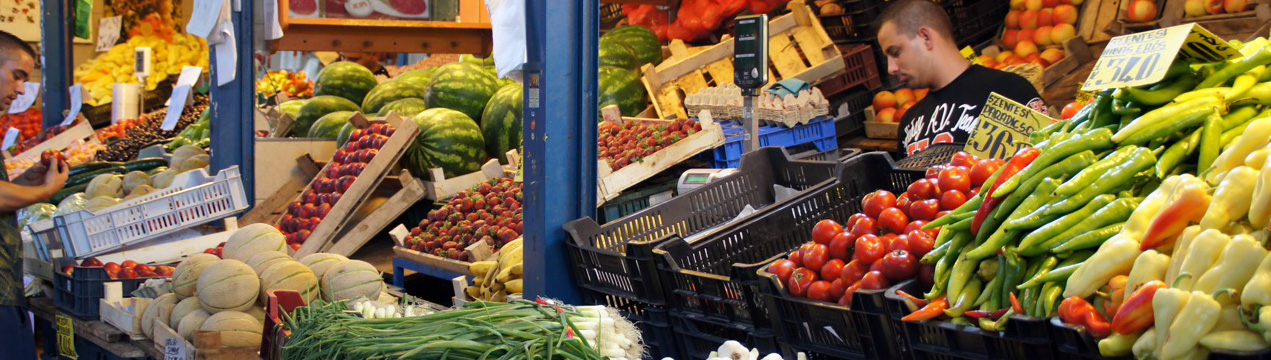 Form detailed and up-to-date information about hours and events at the various market halls, visit: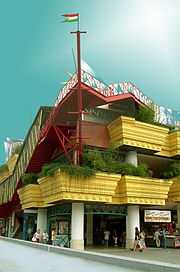


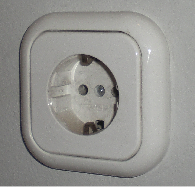
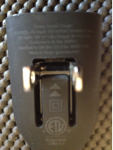
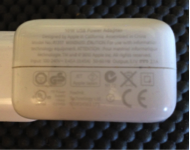 or the relatively clear information here: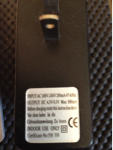
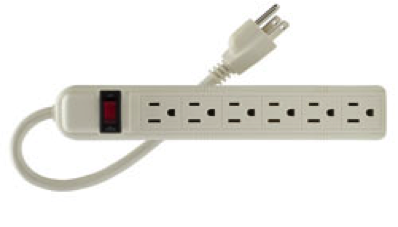
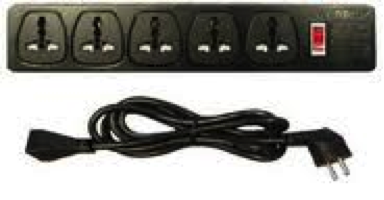
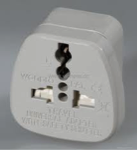
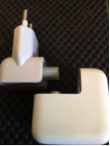 (2) a white USB charger that works on European voltage and has European plugs and accepts any cable with a normal USB (male) plug at one end (this includes iPhones and many cables that allow you to charge your mobile phone from a computer); this charger is not powerful enough to charge an iPad;
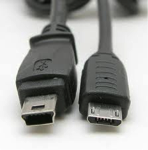
 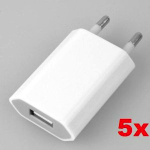 (3) European wall chargers for devices that have a mini-USB
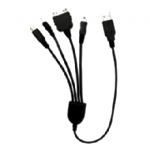 and (4) a micro-USB connector (Most Blackberry phones use one or the other, and in fact almost all newer phones will accept one of these); and (5) a hydra-headed USB connector cable that should work with almost any device imaginable that accepts 5-5.1 volts input from its charger: